The European Union’s Packaging and Packaging Waste Regulation (PPWR 2026, Regulation (EU) 2025/40) is about to reshape how companies design, source, and use packaging across the single market. Confirmed by the European Commission, the regulation entered into force on 11 February 2025 and will generally apply from 12 August 2026. From that date, packaging placed on the EU market must meet harmonised PPWR packaging requirements covering minimisation, recyclability pathways, substance restrictions, declarations of conformity, and strengthened extended producer responsibility (EPR) obligations.
For e-commerce sellers, wine and spirits producers, electronics manufacturers, skincare and cosmetics brands, perfume houses, glassware and tea-set makers, and their distributors, the clock is ticking under the broader EU packaging compliance framework. Non-compliant packaging risks market access barriers, border holds, and eventual national penalties. This practical checklist explains the key obligations, focuses on packaging reduction, recyclability, void-space (empty-space) limits, material information, and self-assessment steps, then shows how solutions from LockedAir and LockedPaper can help businesses move toward compliance while protecting products.
Timeline and Scope: What Applies from 12 August 2026
The PPWR replaces the old Packaging and Packaging Waste Directive with a directly applicable regulation. Core obligations starting 12 August 2026 include:
Preparation of an EU Declaration of Conformity and supporting technical documentation for packaging types.
Compliance with restrictions on hazardous substances (including certain PFAS limits in relevant applications and heavy-metal concentration limits).
Identification and marking rules for manufacturers.
EPR registration and reporting obligations that apply more uniformly, with previous national volume thresholds largely removed in many member states.
Later milestones remain important for planning: design-for-recycling criteria and minimum recyclability grades (A/B/C) become mandatory from 2030, with stricter recycled-at-scale requirements from 2035; packaging minimisation and empty-space ratio limits also phase in around 2030 (with some earlier guidance and measurement standards expected). Packaging minimisation and empty-space rules already influence purchasing decisions today because redesign cycles take time. These timelines and manufacturer obligations are further clarified in recent professional legal analyses.
Anyone placing primary, secondary, tertiary or e-commerce packaging on the EU market—whether an EU-based brand, importer, or non-EU manufacturer selling via marketplaces—falls under the rules.
Packaging Reduction and Minimisation
A central PPWR goal is to cut unnecessary packaging weight and volume. By 2030, packaging must be designed so that its weight and volume are reduced to the minimum necessary for functionality (protection, hygiene, safety, handling). Designs that artificially inflate perceived volume—double walls, false bottoms, unnecessary layers—are restricted.
For e-commerce, grouped and transport packaging, an empty-space (void) ratio limit of 50% is set to apply from 2030. “Empty space” is the difference between the outer packaging volume and the volume of the product (or sales packaging) inside; space filled with air pillows, paper void-fill, bubble material or foam is counted as empty space. This directly pressures brands that currently over-box fragile items such as bottles, electronics or cosmetics.
Practical implication: right-size cartons, choose high-performance yet low-volume protective materials, and eliminate excess layers. On-demand systems that produce only the cushioning needed for each order help keep the overall pack lean while still preventing damage.
Recyclability Requirements
From 2030, packaging must be designed for material recycling and achieve at least grade C (roughly ≥70% recyclable by weight under the forthcoming methodology); higher grades (A ≥95%, B ≥80%) become the long-term expectation, with “recycled at scale” criteria applying later. Single-material or easily separable constructions are favoured. Multi-material laminates that hinder sorting or contaminate recycling streams face increasing pressure.
Paper-based and certain mono-material film solutions generally score better than complex mixed plastics when collection and sorting infrastructure exists. Brands should already audit current materials for recyclability performance and request supplier data that can support future Declarations of Conformity.
Material Information, Labelling and Traceability
The PPWR strengthens requirements for material composition information, manufacturer identification and unique identifiers (batch, barcode or QR). Accurate technical documentation must be retained (typically five years for single-use packaging). Clear, standardised labelling helps recyclers and supports EPR fee modulation that rewards better-designed packaging.
Companies need reliable data from material and machine suppliers on composition, recycled content (where applicable), and end-of-life pathways.
Corporate Self-Check Checklist
Use this practical sequence to prepare before 12 August 2026 and beyond:
1. Map all packaging types placed on the EU market (primary, secondary, e-commerce, transport). Identify who is the “producer” for EPR purposes in each member state.
2. Collect composition and performance data from suppliers. Confirm absence of restricted substances and ability to support a Declaration of Conformity.
3. Measure current empty-space ratios for representative e-commerce and transport packs. Calculate product volume versus outer carton volume; note how much is occupied by void-fill.
4. Assess recyclability pathway: Is the pack mono-material or easily separable? Does it risk contaminating paper or plastic streams?
5. Review minimisation opportunities: Can thinner or higher-performance materials, right-sized cartons, or on-demand cushioning reduce weight and volume without increasing damage rates?
6. Establish technical documentation and DoC processes. Assign unique identifiers and retain records.
7. Engage EPR schemes early in relevant member states; prepare volume reporting systems.
8. Pilot alternative materials and machines that improve compliance metrics while protecting high-value or fragile goods (wine, cosmetics, electronics, glassware).
9. Train packaging and logistics teams on new measurement and documentation routines.
10. Monitor implementing acts and national guidance issued through 2026–2028 for detailed methodologies on empty space and recyclability grades.
Recommended Solutions Aligned with PPWR Goals
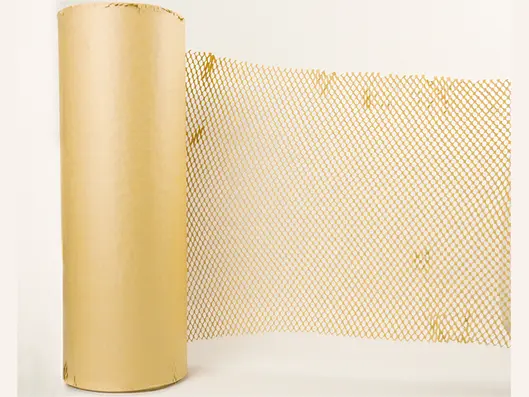
LockedPaper paper-based systems deliver recyclable, biodegradable or easily recyclable protective packaging that supports both minimisation and recyclability objectives. Machines such as the LP-V series void-fill systems, LP-C pad machines, InBubble paper-bubble equipment and honeycomb paper wrappers convert kraft paper into three-dimensional cushioning on demand. The patented “V” shape and efficient conversion reduce paper consumption while providing effective light-load blocking and void fill. Because the material is paper, it aligns well with existing paper recycling streams and helps lower the overall environmental footprint of e-commerce and industrial shipments. Custom logo printing on paper materials is available, strengthening brand presentation for cosmetics, wine and electronics unboxing experiences.
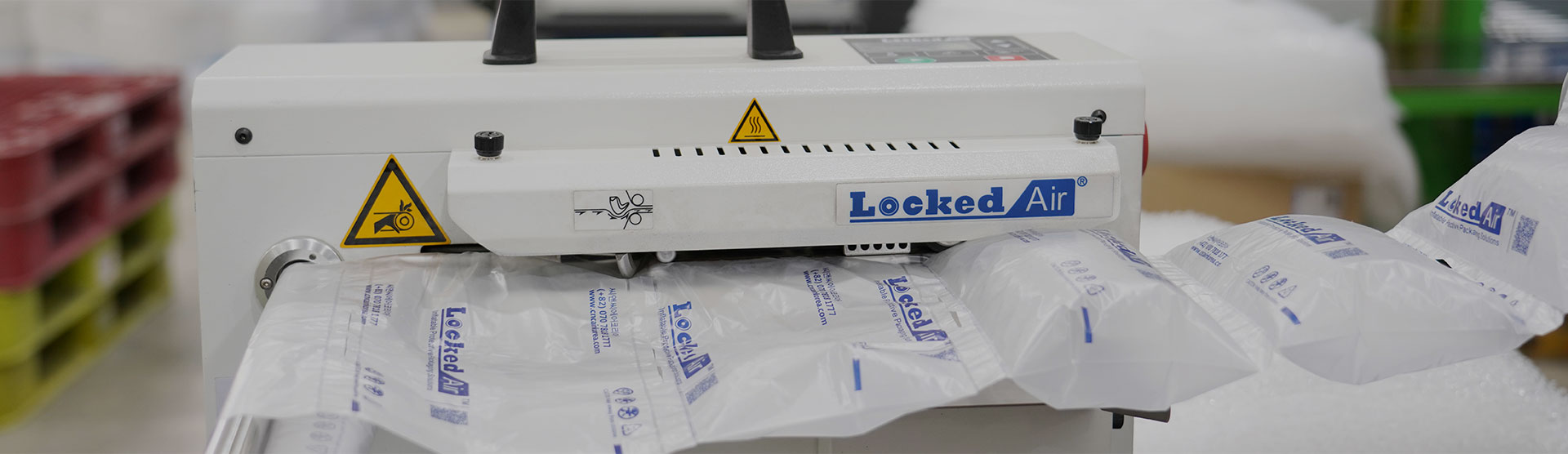
LockedAir air-cushioning and air-column solutions address protection needs with minimal material mass. Locked air machine produce air pillows and bubble film on demand, expanding film volume dramatically so that storage and transport of packaging materials themselves become more efficient. Air column bags (including kraft-paper-composite, aluminium and specialised shapes) offer customisable sizes, forms (Q-cap, L-cap, square-bottom, custom) and materials tailored to specific products—ideal for bottles, electronic components, skincare jars or fragile glassware. Because air is the primary protective medium, material usage per unit of protection is low, supporting packaging-reduction goals. Custom branding and material options further help brands meet both protective and EU packaging compliance requirements under locked air packaging solutions.
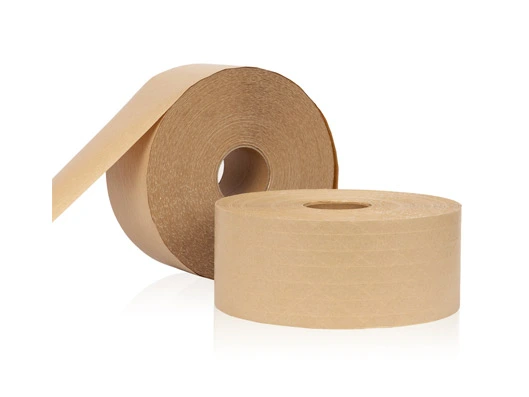
Water activated kraft tape provides a strong, tamper-evident, recyclable carton seal. These systems from LockedPaper create fibre-to-fibre bonds that outperform many plastic tapes in security and end-of-life compatibility. Sustainable water activated tape dispenser options (manual or automated) integrate easily into high-volume packing stations. Understanding how does water activated tape work—moisture activates the starch-based adhesive—and how to use water activated tape correctly allows teams to achieve reliable seals while remaining compatible with paper recycling streams. Working with reliable water activated tape manufacturers helps ensure consistent quality and supports EU packaging compliance.
These systems are complementary: paper for recyclability-focused void fill and wrapping, air systems for lightweight high-protection cushioning and product-specific air column bags, and water activated gummed paper tape for secure, recyclable sealing. Purchasing consumables enables logo customisation; air column bags further support shape and material customisation for different product geometries.
Moving Forward
The 12 August 2026 application date is only weeks away at the time of writing. Brands and distributors that treat PPWR packaging requirements as a design and supplier-selection opportunity rather than a pure compliance burden will reduce risk, control costs and strengthen customer perception. Start with the self-check above, measure empty space and material performance on current packs, and evaluate on-demand LockedPaper and LockedAir equipment together with water activated gummed paper tape solutions.
Early action in August 2026 and the months that follow will position companies to meet both the immediate obligations and the stricter 2030 recyclability and minimisation targets with confidence.

 中文
中文