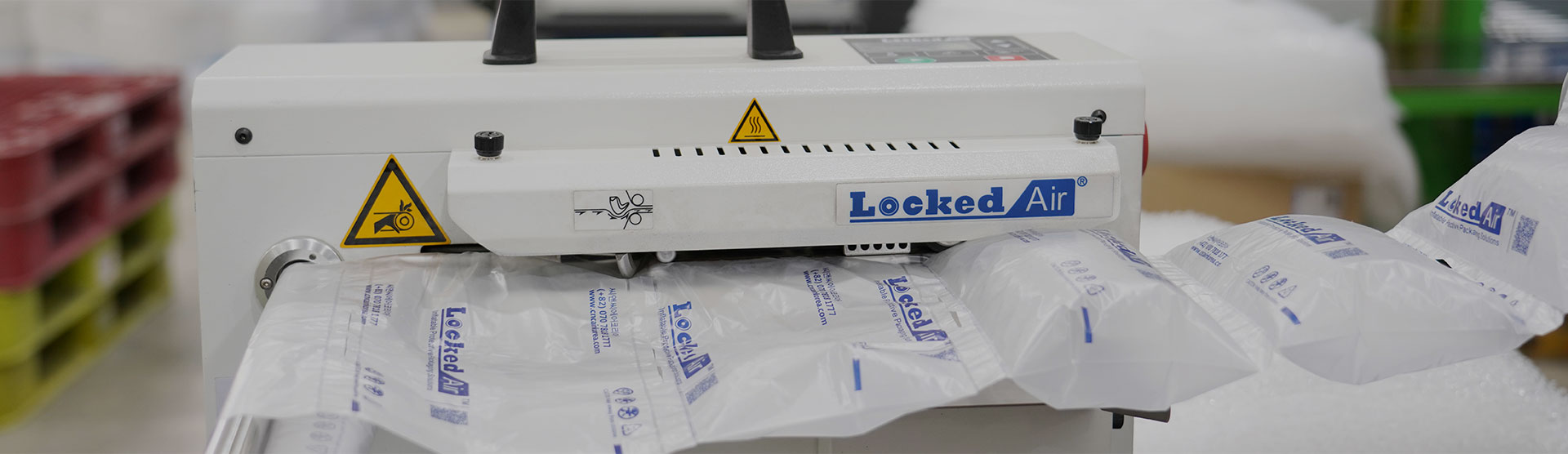
As businesses prepare for the European Union's Packaging and Packaging Waste Regulation (PPWR), choosing the right protective packaging system has become more important than ever. Companies are no longer evaluating packaging based solely on purchase price. Instead, they are considering protection performance, material efficiency, storage requirements, recyclability, and compliance with future regulations.
One of the most common questions is air pillows vs paper void fill. Is paper always the better choice? Should plastic air cushions be replaced entirely? The answer is more complex than many people expect.
Under PPWR, the objective is not to eliminate a particular material but to encourage packaging that reduces waste, improves recyclability, and protects products efficiently. In many situations, well-designed inflatable packaging can prevent product damage and replacement shipments, reducing the overall environmental impact.
For manufacturers, e-commerce brands, wine producers, cosmetics companies, electronics suppliers, and distributors, selecting the most suitable protective packaging requires balancing sustainability with operational efficiency.
What Does PPWR Mean for Protective Packaging?
PPWR introduces stricter expectations for packaging placed on the European market. While implementation timelines vary, the regulation encourages businesses to improve packaging design by reducing unnecessary materials and increasing recyclability.
Instead of asking whether paper or plastic is "better," companies should evaluate whether their packaging:
Uses only the material necessary for protection
Fits existing recycling systems
Minimizes transport waste
Protects products from damage
Supports efficient warehouse operations
This approach encourages businesses to choose PPWR compliant packaging based on overall performance rather than material type alone.
Air Pillows vs Paper Void Fill: A Practical Comparison
Both inflatable air cushions and paper void fill are widely used as protective packaging materials, but each performs differently depending on the application.
The comparison below highlights the factors businesses should evaluate before selecting a packaging system.
Evaluation Factor | Air Pillows | Paper Void Fill |
Product protection | Excellent for lightweight and fragile products | Excellent for heavier products and blocking movement |
Packing speed | Very fast with automated systems | Fast with paper machines; slower for manual packing |
Material weight | Extremely lightweight | Heavier than inflatable cushions |
Storage efficiency | Excellent, films occupy very little space before inflation | Requires more warehouse space for paper rolls |
Recycling pathway | Depends on local plastic film recycling | Widely accepted in paper recycling where clean |
Best application | E-commerce, electronics, cosmetics, glassware | Heavy goods, premium packaging, industrial products |
Neither solution is universally superior. The most appropriate choice depends on product characteristics, transportation risks, and local recycling infrastructure.
Product Protection Should Always Come First
Packaging exists to protect products throughout the supply chain. If inadequate cushioning results in damaged goods, the environmental impact extends far beyond the packaging itself.
Replacement products require:
This is why many companies continue using inflatable air pillows for fragile products.
Because air provides most of the cushioning, inflatable systems use relatively little material while delivering high shock absorption.
These products are commonly used for shipping mobile devices, cosmetics, perfumes, consumer electronics, wine bottles, and fragile household items.
For particularly delicate products, customized air column packaging can provide individual protection by surrounding each item with multiple air chambers, helping reduce movement and impact during transportation.
Packaging Speed Matters in High-Volume Operations
For fast-growing e-commerce businesses, packaging speed has a direct impact on labor costs and order fulfillment.
Inflatable packaging systems automatically produce cushions when needed, allowing operators to pack orders quickly without storing large quantities of pre-filled materials.
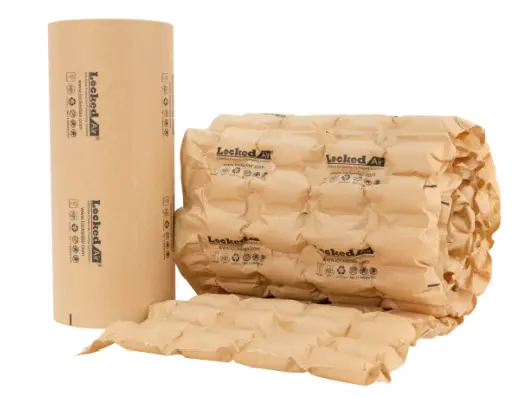
Paper systems have also become increasingly automated. Modern paper dispensers convert flat paper into cushioning in seconds, making them suitable for businesses that prefer paper-based sustainable void fill solutions.
However, packing efficiency depends on shipment volume.
For example:
Small fulfillment centers may prefer manual paper solutions because of their simplicity.
High-volume distribution centers often benefit from automated inflatable systems that produce consistent cushions throughout the day.
Choosing the appropriate equipment should therefore consider both operational scale and packaging requirements rather than material preference alone.
Material Weight Influences Shipping Efficiency
Packaging weight affects transportation costs, warehouse handling, and overall material consumption.
One advantage of inflatable packaging is that it consists primarily of air. This means air filled plastic packaging typically adds very little weight to each shipment while providing effective cushioning.
Paper void fill generally weighs more but offers excellent blocking and bracing performance for heavier products.
Companies comparing paper vs plastic packaging should therefore evaluate total logistics performance, including:
Shipping weight
Product protection
Material consumption
Transport efficiency
Customer expectations
For lightweight consumer goods, inflatable packaging often minimizes shipping weight. For larger industrial products, paper cushioning may provide better load stability.
Storage Space Can Affect Operating Costs
Warehouse space is often overlooked when comparing protective packaging systems, yet it has a direct impact on operating costs.
Inflatable packaging has a significant storage advantage because the film is delivered flat and inflated only when required. Thousands of cushions can be produced from a single roll of film, reducing the space needed to store packaging materials. This is particularly valuable for fulfillment centers handling seasonal demand or a wide variety of products.
Paper void fill requires paper rolls, which generally occupy more storage space than flat air cushion film. However, paper systems remain an excellent choice for businesses that prefer paper-based packaging or already have established paper recycling processes.
When evaluating storage requirements, companies should consider:
Recycling Pathways Depend on Local Infrastructure
One of the main goals of PPWR is to improve packaging recyclability, but recycling performance depends on local collection and processing systems.
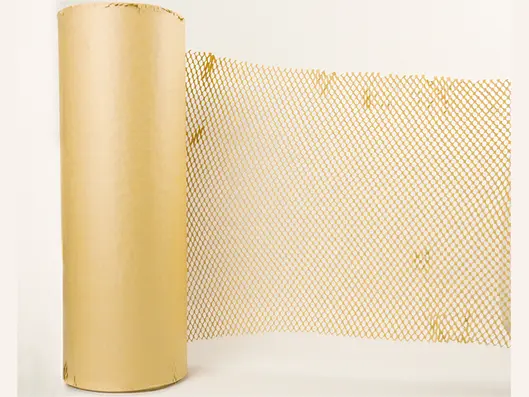
For example, eco friendly paper bubble wrap can often be recycled with corrugated cardboard where clean paper recycling is widely available.
Inflatable plastic packaging may be recyclable through plastic film collection programs in regions where those facilities exist. In some markets, however, film recycling options remain limited.
Therefore, selecting PPWR compliant packaging should involve understanding the recycling infrastructure available in the destination market rather than assuming one material is always more sustainable.
Businesses should ask:
Can customers easily recycle this material?
Is the packaging made from recyclable materials?
Does the packaging minimize unnecessary waste?
Will the packaging protect the product effectively enough to prevent replacement shipments?
These questions help balance environmental performance with practical logistics.
Comparing Damage Rates
Product damage is one of the largest hidden costs in distribution.
If packaging fails, businesses face:
Replacement products
Return shipping
Customer complaints
Additional packaging
Lost brand reputation
For lightweight and fragile products, inflatable cushioning generally provides excellent shock absorption because multiple air chambers distribute impact forces evenly.
Paper void fill performs exceptionally well when blocking and stabilizing heavier items inside cartons, preventing movement during transportation.
Instead of asking which material is "better," businesses should evaluate which system delivers the lowest damage rate for their specific products.
Choosing the Right System for Your Industry
Different industries require different packaging strategies.
E-commerce
Fast fulfillment and lightweight packaging are often priorities. Inflatable air pillows help reduce shipping weight while supporting high packing speeds.
Wine and Spirits
Glass bottles require reliable protection against impact. Customized air column packaging surrounds each bottle individually, reducing the risk of breakage during transport.
Consumer Electronics
Electronic devices benefit from lightweight cushioning that protects delicate components without significantly increasing shipping costs.
Cosmetics and Fragrances
Premium brands often combine attractive presentation with reliable protection. Depending on brand positioning and local recycling systems, either paper cushioning or inflatable packaging may be suitable.
Distributors
Distributors serving multiple industries often benefit from offering both paper- and air-based packaging solutions, allowing customers to choose according to product characteristics and regional recycling requirements.
Flexible Packaging Solutions from LockedAir
Because every product has different protection requirements, many businesses choose a combination of paper and inflatable packaging rather than relying on a single material.
Locked Air offers inflatable protective packaging solutions, including:
Air cushion film
Bubble packaging
Air column bags
Air column bags are available in customized sizes, materials, and chamber designs to match different products, while many consumables can also be printed with customer logos to strengthen brand identity.
For companies looking for paper-based alternatives, Locked Air provides paper cushioning equipment and consumables that support efficient sustainable protective packaging for a wide range of shipping applications.
Together, these two product families enable businesses to select packaging based on product risk, operational efficiency, and recycling considerations instead of material preference alone.
How to Choose Between Air Pillows and Paper Void Fill
When comparing air pillows vs paper void fill, consider the following questions:
How fragile is the product?
What level of protection is required?
How much warehouse space is available?
Which recycling systems are available in the destination market?
Is shipping weight a significant cost factor?
How important is packing speed?
Answering these questions will help identify the packaging system that best balances protection, efficiency, and sustainability.
Conclusion
The debate over air pillows vs paper void fill does not have a universal winner. Under PPWR, the focus is on creating packaging that minimizes waste while effectively protecting products throughout the supply chain. Air pillows offer lightweight protection, fast packing, and efficient storage, while paper void fill provides strong blocking performance and broad paper recycling compatibility in many regions. The best PPWR compliant packaging solution depends on product risk, logistics requirements, and local recycling infrastructure. By evaluating packaging performance as a complete system, businesses can improve operational efficiency, reduce product damage, and move toward more sustainable protective packaging without compromising customer satisfaction.

 中文
中文